October 2026
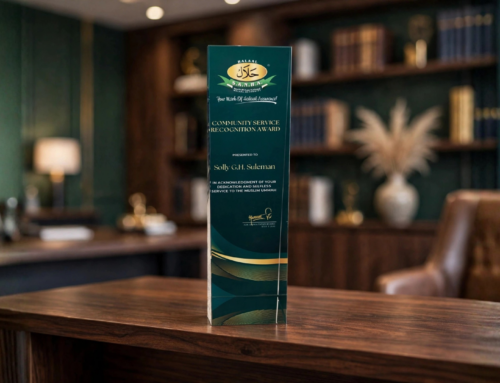
At SANHA’s commemorative 30th Annual General Meeting, held on 18 October 2026 in Johannesburg, Moulana Zahier Ragie delivered the keynote address.
His address provided a philosophical and ethical framework for the work of a Halaal institution. Its message is also relevant to other public benefit organisations. A summary follows:
The Responsibility Behind the Halaal Mark
In his address, Moulana Ragie challenged SANHA to look beyond the administrative, commercial and financial dimensions of Halaal certification and to recognise the profound spiritual responsibility that lies behind the work.
Moulana Zahier Ahmed Ragie placed this responsibility into sharp perspective. He reminded delegates that the significance of Halaal extends far beyond what appears on a product or certificate. The nourishment a person consumes has a direct bearing on their spiritual life, making the integrity of the Halaal system a matter of profound consequence.
This, he said, elevates the daily work of a Halaal authority from a corporate operation to an Ibaadah requiring the highest standards of protection, integrity and accountability.
Moulana Ragie proposed that this responsibility must be underpinned by three fundamental principles of Islamic corporate governance: Amaanah, Adl and Shura.
Amaanah (Trust) represents an accountability that extends beyond conventional fiduciary responsibility. Positions may be temporary, but accountability to Allah Ta’ala is permanent. Those entrusted with the Halaal system are, in effect, protecting the faith and trust placed in the authority by the public.
Adl (Justice) demands unwavering objectivity. Whether dealing with a multinational corporation or a small home-based enterprise, the standards must remain the same. Influence, prestige or financial contribution can never determine the outcome of a Halaal assessment.
Shura (Consultation) requires the meaningful integration of technical expertise and Shariah knowledge. Food scientists and Shariah scholars must work together as equals, combining their respective expertise to ensure that decisions are both technically sound and Islamically grounded.
Building on these principles, Moulana Ragie identified three areas requiring particular attention.
First is the absolute elimination of conflicts of interest. Inspectors, auditors, scholars and decision-makers must operate independently, with clear safeguards protecting both actual independence and the public perception of independence.
Second is transparency. In an age of increasing consumer scrutiny, confidence is strengthened when standards, verification processes and governance structures are accessible and clearly understood. Transparency, he emphasised, should be regarded not as a vulnerability, but as a strength.
Third is continuous professional development. With food technology advancing rapidly through areas such as bio-engineering, laboratory-grown alternatives and increasingly complex global supply chains, Halaal authorities must continually develop their expertise. Scholars need an understanding of evolving industry practices, while technical professionals must appreciate the principles of Shariah.
In his closing challenge, Moulana Ragie reminded the gathering that a Halaal authority is entrusted with far more than certificates and logos. It is entrusted with what enters the bodies of families and communities.
The success of a Halaal authority, therefore, cannot be measured solely by financial performance, growth or the number of certifications issued. It must ultimately be measured by the strength of its ethical foundation, the integrity of its governance and the sincerity with which it fulfils its Amaanah.
His address provided the AGM with a profound reminder: the Halaal mark represents a responsibility far greater than the mark itself.
We thank Moulana Ragie for his address. May Allah Ta’ala reward you abundantly for your service to Islam, Aameen.